Conditions · Extremities
Shoulder Pain Chiropractor
Shoulder pain can begin in the joint, surrounding tendons and muscles, the neck, or a combination of these areas. An overhead athlete may be dealing with repetitive loading, while a desk worker may notice stiffness and discomfort after long periods in one position. Similar symptoms do not always have the same cause.
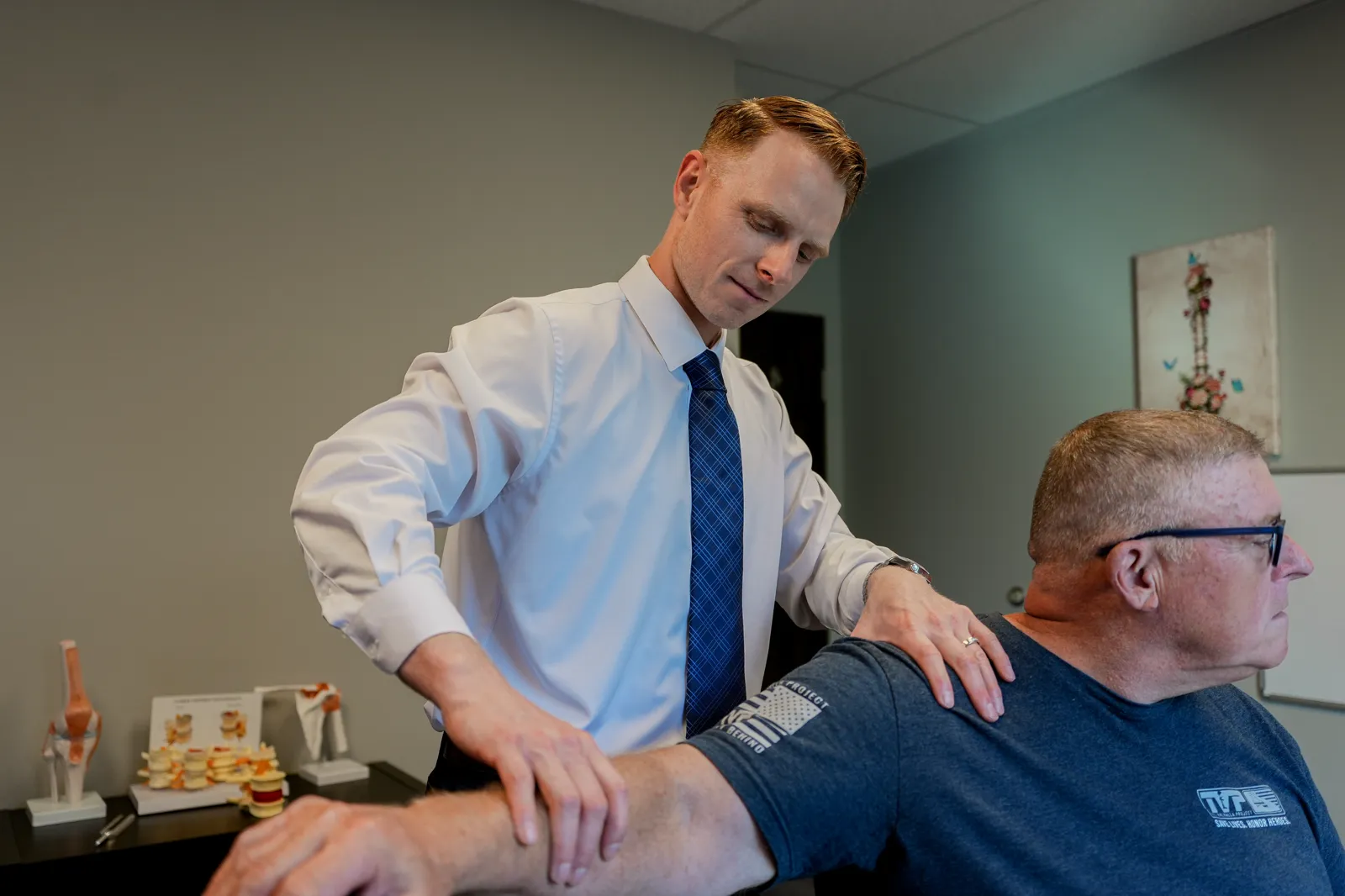
At SpineCo: Chiropractic & Performance, Dr. Ryan Bielecki, D.C. starts with a one-on-one history and examination. He assesses shoulder motion and strength along with the cervical and thoracic spine before recommending care. That full-system view helps avoid treating only the spot where the pain is felt.
What kind of chiropractor treats shoulder pain in Downers Grove IL?
Dr. Ryan Bielecki, D.C. at SpineCo in Downers Grove evaluates the shoulder together with the cervical spine, upper back, and movement pattern. The goal is to determine what is contributing to the pain, identify when referral or imaging may be appropriate, and build an individualized conservative care plan.
Overhead activity and desk posture create different demands
Baseball, swimming, tennis, weightlifting, and other overhead activities repeatedly load the shoulder near the end of its available range. Shoulder function depends on coordinated motion between the upper arm, shoulder blade, and thoracic spine. When one part of that system is limited or fatigued, another area may take on more stress.
Desk work creates a different pattern. Remaining in one position for long periods may contribute to neck and upper-back stiffness, reduced movement variety, and sensitivity around the shoulder. Posture is only one part of the picture, so an evaluation should also consider workload, sleep, prior injuries, strength, and the specific movements that reproduce symptoms.
SpineCo does not use the same plan for every shoulder complaint. The examination is used to distinguish mobility limitations, strength or load-tolerance issues, possible referred pain, and findings that should be evaluated by another healthcare professional.
Why the neck and upper back are included in a shoulder exam
Nerves from the cervical spine travel into the shoulder and arm, and neck problems can sometimes refer symptoms into those areas. The thoracic spine also contributes to the movement needed for reaching and overhead activity. Symptom location alone cannot reliably show whether the shoulder joint is the only structure involved.
Dr. Bielecki's examination therefore includes cervical and thoracic motion, shoulder range of motion, strength, and orthopedic testing when appropriate. The findings help determine whether the plan should focus on the shoulder, the surrounding movement system, or a referral for further evaluation.
When restricted spinal or joint motion appears to be contributing, hands-on care may be one part of a broader plan. Any recommendation is based on the individual's examination and response rather than an assumption that every shoulder problem should be adjusted.
A conservative plan built around movement and capacity
Care may combine chiropractic or manual therapy with progressive exercise, activity modification, and guidance for returning to work or sport. Exercise is an important part of conservative shoulder care because it can improve movement control, strength, and tolerance for the activities that matter to the patient.
For chronic tendon-related presentations, Dr. Bielecki may discuss extracorporeal shockwave therapy when the examination suggests it is appropriate. It is not used as a universal solution, and it does not replace a diagnosis, progressive loading, or referral when the clinical picture calls for another type of care.
Progress is measured against practical goals such as sleeping more comfortably, reaching overhead, working at a desk, lifting, or returning to sport. The frequency and duration of care depend on the diagnosis, how long symptoms have been present, and how the patient responds.
When shoulder pain needs urgent medical attention
Call 911 for shoulder or arm discomfort accompanied by chest pressure or pain, shortness of breath, sweating, nausea, lightheadedness, or discomfort in the jaw or back. These can be warning signs of a heart attack and should not be treated as a routine musculoskeletal appointment.
Seek prompt medical evaluation after a major injury or when there is an obvious deformity, sudden severe swelling, fever or redness, new weakness or numbness, or an inability to move the arm. Shoulder pain that is worsening, disrupting sleep, or not improving with reasonable self-care also deserves an assessment.
For non-emergency symptoms, SpineCo's first step is to understand the history, examine the full region, and explain the findings. If the presentation is outside the clinic's scope or needs imaging or medical evaluation, the appropriate next step is referral rather than treatment at all costs.
There is no risk to see what we can do for you.
Book online in under a minute, or call the office and talk it through first.
FAQ
Questions, answered.
How do I know if my shoulder pain is coming from my neck or the shoulder joint?
Symptom location alone cannot reliably answer that question. A clinical examination can compare neck and shoulder movement, strength, neurological findings, and the activities that reproduce symptoms. At SpineCo, Dr. Bielecki assesses both regions and refers for imaging or another medical evaluation when the findings indicate that it may be needed.
Can a chiropractor help an overhead athlete with shoulder pain?
Chiropractic or manual therapy may be one part of a conservative plan, but the plan should be based on an examination. Overhead athletes often also need progressive exercise, workload changes, and a staged return to throwing or lifting. Dr. Bielecki's collegiate baseball background informs the evaluation, while each recommendation remains specific to the patient.
Is chiropractic appropriate for shoulder pain that developed at a desk?
It may be, depending on the cause and examination findings. A plan can address neck or upper-back mobility, shoulder capacity, movement breaks, and targeted exercise rather than relying on posture correction alone. SpineCo first checks for signs that the problem needs medical evaluation or a different type of care.
Can shoulder pain improve without surgery or injections?
Many common shoulder problems are initially managed with conservative care, which may include activity modification and progressive exercise. Hands-on care or shockwave therapy may be considered for selected patients. Surgery, injections, or imaging can still be appropriate in some cases, so the first step is an individualized assessment rather than a promised outcome.
How long does shoulder pain care typically take at SpineCo?
There is no single timeline. It depends on the diagnosis, symptom duration, activity demands, and response to care. After the initial evaluation, Dr. Bielecki explains the findings, recommends a plan when appropriate, and uses functional goals to monitor whether that plan is helping.
How do I book a shoulder pain appointment in Downers Grove IL?
Book online through the Jane App or call (630) 442-0146. SpineCo is at 1121 Warren Ave Suite 210, Downers Grove, IL 60515. Office hours are Monday, Wednesday, and Thursday 9am–6pm; Tuesday 2pm–7pm; and Friday 9am–2pm.
Clinical references
Sources used on this page
- Common Shoulder Injuries — American Academy of Orthopaedic Surgeons
- Shoulder Impingement and Rotator Cuff Tendinitis — American Academy of Orthopaedic Surgeons
- Exercise therapy for rotator cuff-related shoulder pain — Journal of Orthopaedic & Sports Physical Therapy via PubMed
- Heart Attack Warning Signs — American Heart Association