The Services
Auto Injury Relief
A collision reshapes your priorities in seconds. Vehicle damage, insurance calls, police reports — the logistics take over, and your body gets pushed to the back of the list. That delay is where the real problems begin. Many of the musculoskeletal injuries that follow a car accident are not immediately painful; they are the kind that surface later, compound quietly, and become far harder to address once time has passed.
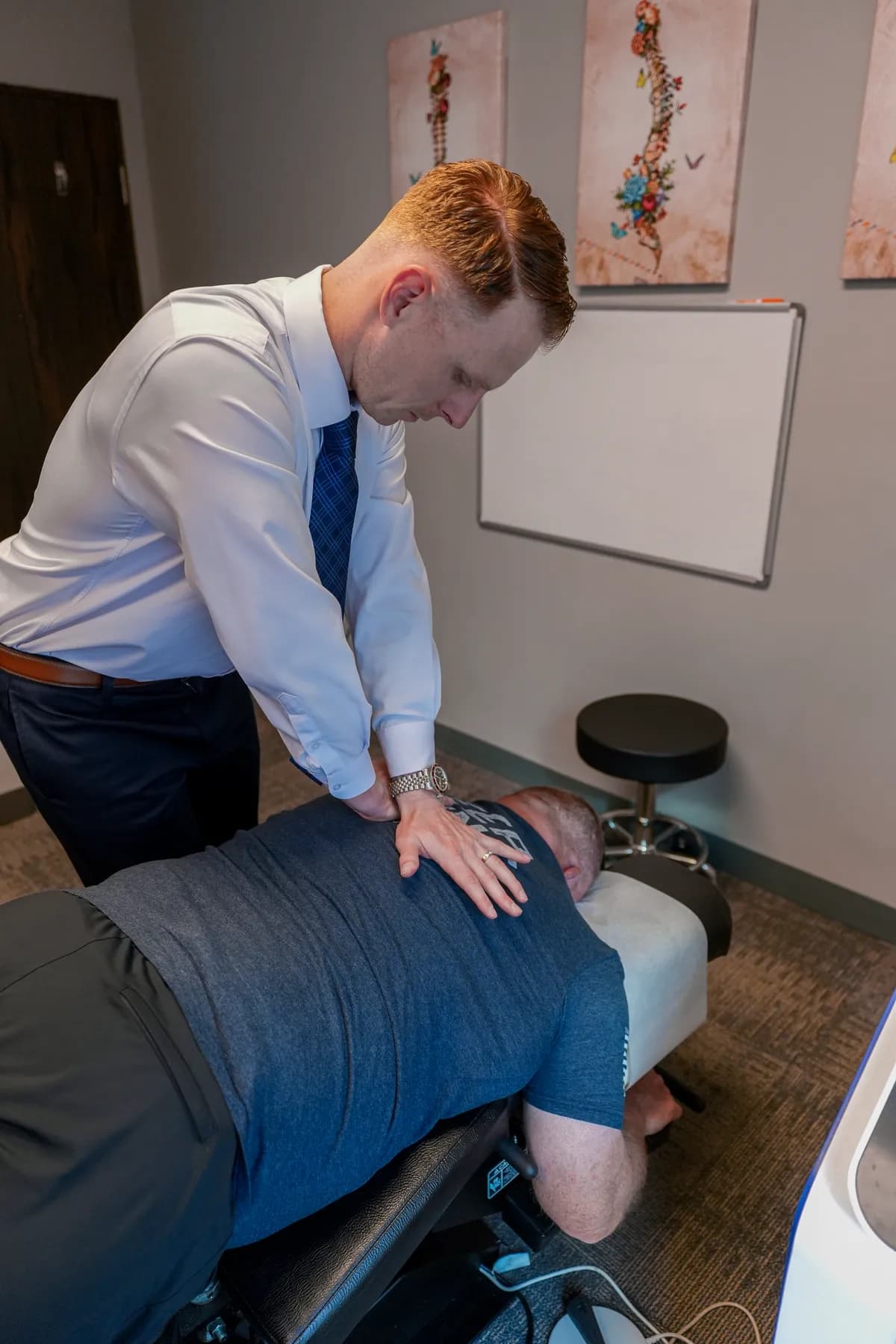
At SpineCo: Chiropractic & Performance in Downers Grove IL, Dr. Ryan Bielecki, D.C. runs a structured post-collision recovery program — not a one-size-fits-all adjustment and a phone number for a referral. The program begins with a comprehensive assessment, builds an individualized care plan, and documents your condition and progress throughout. That documentation is not incidental; it is a core part of responsible care after any collision.
What should I do after a car accident in Downers Grove IL if I have pain or stiffness?
Get evaluated promptly — even if your pain seems minor. At SpineCo in Downers Grove IL, Dr. Ryan Bielecki, D.C. conducts a thorough post-collision assessment, documents your injuries precisely, and builds a structured recovery program so nothing is missed and every finding is on record.
Why low-speed impacts still warrant a full evaluation
The forces involved in even a modest collision can load the cervical spine in ways that strain muscles, ligaments, and joint capsules without breaking anything. A vehicle traveling at 5 mph at the moment of impact can generate the acceleration forces associated with whiplash. Headrest height, seat position, occupant awareness at impact, and the relative mass of the vehicles involved all influence how those forces distribute through the body — factors no driver can control in the moment.
Soft-tissue injuries to the spine's supporting structures are not visible on a standard X-ray and do not always announce themselves the day of the crash. The inflammatory response, guarding patterns, and joint restrictions that develop in the hours and days afterward are where the injury becomes real to the patient. Waiting to see whether symptoms appear can mean starting care weeks after the tissue damage occurred — precisely the window when early intervention has the most to offer.
Dr. Bielecki conducts a systematic evaluation that maps the cervical and thoracic spine, assesses joint mobility at each segment, and identifies areas of restricted motion, muscle guarding, or nerve irritation. If findings warrant imaging referral, that referral happens promptly. Nothing is presumed absent until it is assessed.
The structured recovery program: what sets it apart
Post-collision care at SpineCo is organized as a program with defined phases — assessment, active treatment, functional restoration — rather than open-ended visits with no benchmarks. That structure matters clinically and practically. Clinically, it keeps the focus on progressive improvement rather than symptom management alone. Practically, it creates a documented record of your condition at each stage.
Treatment typically combines spinal adjustments targeted to restricted segments, soft-tissue work addressing the musculature around injured joints, progressive exercise rehabilitation to restore strength and movement patterns, and other supportive modalities where indicated. The precise combination depends on what the assessment finds — not a predetermined protocol.
Because this is 100% one-on-one care, every session involves Dr. Bielecki directly. He evaluates your response to the prior visit, adjusts the plan based on what he finds, and progresses your rehabilitation at a pace calibrated to your tissue state — not a schedule set in advance.
Documentation: the part most patients overlook
Thorough clinical documentation is one of the most consequential services a post-collision provider offers. Insurance timelines move independently of your recovery timeline, and the window during which injuries can be linked to the accident narrows. Objective findings — range-of-motion measurements, palpation findings, orthopedic test results, functional assessments — recorded at the time of treatment establish a contemporaneous clinical picture that subjective patient reports alone cannot create.
Dr. Bielecki's approach to post-collision care is built around clinical thoroughness, not administrative shortcuts. Each visit generates notes that reflect your current presentation and how it compares to the baseline established at your initial exam. That progression record is available to you and, when appropriate, to the parties handling your case.
This is not legal advice, and SpineCo does not provide legal or insurance services. What SpineCo provides is the kind of careful, documented clinical care that gives you and those handling your case the most complete and accurate picture of your injuries and recovery.
Common post-collision injuries evaluated at SpineCo
Whiplash — the rapid flexion-extension strain of the cervical spine — is the most recognized collision injury, but far from the only one. Thoracic and lumbar strain, temporomandibular joint irritation, shoulder girdle strain, concussion-related symptoms, and nerve root irritation from shifted disc material are all presentations that can follow a collision and that deserve systematic evaluation rather than blanket reassurance.
Symptoms that patients commonly present with in the days or weeks after a crash include neck pain and stiffness, persistent headaches, shoulder and upper back pain, radiating arm pain or numbness, low back pain, sleep disruption from positional discomfort, and concentration difficulty. Each of these can trace to specific structural findings — and identifying which structures are involved guides the care plan.
There is no risk to see what we can do for you. A first-visit assessment at SpineCo will tell you clearly what is present, what it means for your recovery, and what the program looks like — so you can make an informed decision about your care.
Timing, access, and getting started
Earlier evaluation generally means more treatment options and a clearer connection between your findings and the collision. If you have been in an accident — even one that seemed minor — the prudent step is prompt evaluation, not observation.
SpineCo is at 1121 Warren Ave Suite 210, Downers Grove, IL 60515. Book online through the Jane App or call (630) 442-0146. Office hours: Monday, Wednesday, and Thursday 9am–6pm; Tuesday 2pm–7pm; Friday 9am–2pm; Saturday and Sunday closed.
There is no risk to see what we can do for you.
Book online in under a minute, or call the office and talk it through first.
FAQ
Questions, answered.
How soon after a car accident should I see a chiropractor?
As soon as possible — ideally within the first few days. Many post-collision injuries involve soft tissue that does not appear on imaging and that benefits most from early evaluation. Prompt assessment also establishes a baseline clinical record that reflects the acute phase of your injury, which is difficult to reconstruct later.
I was in a low-speed crash and feel fine. Do I still need to be seen?
A prompt evaluation is still worth having. Soft-tissue injuries to the cervical ligaments, joint capsules, and supporting musculature can occur at low impact speeds and may not produce significant pain until the inflammatory response peaks — typically 24–72 hours after the collision. An exam takes less time than the symptoms you may be avoiding.
What does the first visit at SpineCo look like for a car-accident patient?
Dr. Bielecki takes a detailed history of the collision mechanics, your symptoms since, and any relevant health history. He then conducts a physical examination covering posture, spinal mobility, muscle tone, orthopedic tests, and neurological screening. You leave with a clear understanding of what was found and what the next steps look like.
Does SpineCo work with auto insurance or attorneys on collision cases?
SpineCo provides thorough clinical documentation of your injuries, examination findings, and treatment progress — documentation that may be relevant to insurance or legal processes. SpineCo does not provide legal advice or insurance services. Specific questions about your case should go to your attorney or insurance representative.
Will the car-accident care program involve anything beyond spinal adjustments?
Yes. Depending on what your assessment reveals, care may include targeted spinal adjustments, soft-tissue therapy, active rehabilitation exercises, supportive modalities, and movement coaching. The program is built from your specific findings — not a fixed protocol.
How do I book an appointment at SpineCo after a car accident?
Book online through the Jane App or call (630) 442-0146. SpineCo is at 1121 Warren Ave Suite 210, Downers Grove, IL 60515. Hours: Mon/Wed/Thu 9am–6pm, Tue 2pm–7pm, Fri 9am–2pm, Sat/Sun closed. Same-week appointments are often available.
Related care