Conditions · Other
Pregnancy Care
Pregnancy is not a single event — it is a sustained physical process that reshapes posture, redistributes load, and places new demands on the spine and pelvis across nine months. The discomfort many patients experience is not incidental; it is the body adapting to real biomechanical change, and it tends to accumulate as each trimester builds on the last.
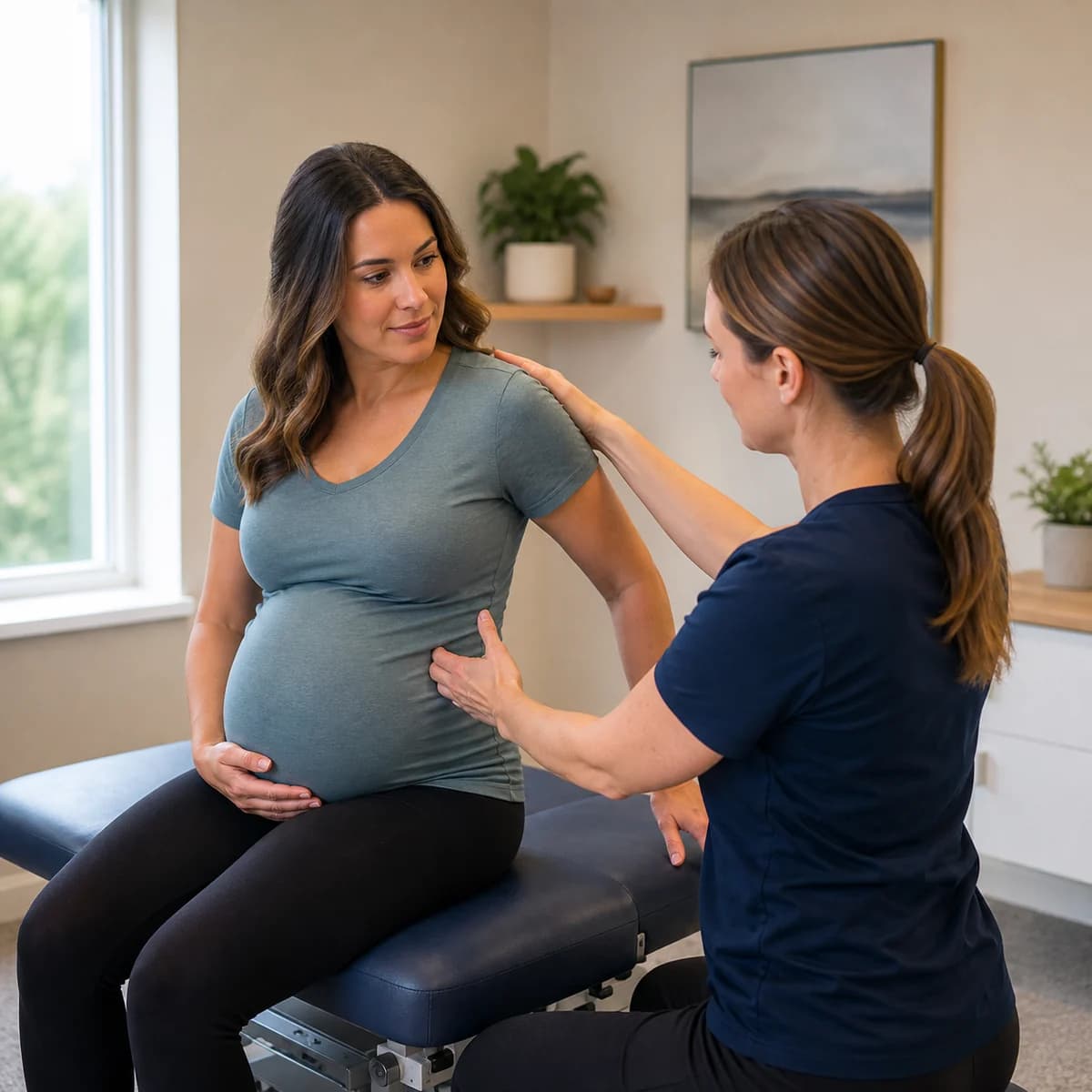
At SpineCo: Chiropractic & Performance in Downers Grove IL, Dr. Ryan Bielecki, D.C. offers gentle, adapted chiropractic care designed for the physical realities of pregnancy. Techniques are modified specifically for each patient and each stage. 100% one-on-one care means the same doctor tracks your progress, adjusts the approach as your body changes, and is present for every visit — not a different provider each time.
Is chiropractic care safe during pregnancy in Downers Grove IL?
Yes. Dr. Ryan Bielecki, D.C. at SpineCo in Downers Grove IL provides gentle, adapted chiropractic care throughout pregnancy. Techniques are modified each trimester to match how the body is changing, with the goal of supporting pelvic and spinal comfort as posture and center of gravity shift. Many patients find it helpful for low back and pelvic discomfort.
How pregnancy reshapes the spine and pelvis, trimester by trimester
The physical changes of pregnancy begin earlier than most people expect. In the first trimester, hormonal shifts — particularly the release of relaxin — begin softening the ligaments throughout the pelvis. This is necessary preparation for birth, but looser ligamentous support means the pelvis and sacroiliac joints are more susceptible to mechanical irritation from everyday movement, posture, and load.
As the second trimester progresses and the abdomen grows, the body's center of gravity moves forward. The lumbar curve deepens to compensate, placing increased demand on the low back extensors and compressing the posterior elements of the lumbar spine. Patients who had pre-existing low back stiffness or sacroiliac asymmetry before pregnancy often find those patterns amplify during this period.
By the third trimester, when fetal weight gain is at its peak, the cumulative effect on the low back, sacroiliac joints, and hip flexors is substantial. Pelvic alignment becomes particularly relevant in the final weeks — the position and mobility of the sacrum and the symmetry of the pelvis have implications for comfort and for how the body carries the baby through this final stage.
Adapted techniques for a changing body
Standard chiropractic techniques require meaningful modification during pregnancy. Positioning that works on a non-pregnant patient — prone (face-down) with direct lumbar pressure — is not appropriate as the pregnancy advances. At SpineCo, Dr. Bielecki adapts positioning, force delivery, and contact points to each patient's stage and comfort.
Side-lying positioning allows effective assessment and treatment of the lumbar spine, sacroiliac joints, and pelvis without abdominal pressure at any trimester. Techniques are gentle and specific — the goal is restoring joint mobility and reducing mechanical tension without any of the aggressive high-velocity work that would be contraindicated. Every session begins with a brief reassessment of how the patient is positioned and what has changed since the last visit.
Many patients express concern about whether chiropractic care is safe during pregnancy. Adapted prenatal chiropractic, applied by a clinician who accounts for the physiological realities of each trimester, is generally well-tolerated. Dr. Bielecki is transparent about what techniques are being used and why, and care is always paced by how the patient responds.
Pelvic and low back discomfort: the most common concerns
Low back pain is one of the most frequently reported complaints throughout pregnancy. According to the American Pregnancy Association, a significant majority of pregnant women experience it at some point, with discomfort typically most pronounced in the third trimester when fetal growth is greatest. The low back is carrying more weight, in a more extended posture, with less ligamentous stability than before pregnancy began.
Sacroiliac pain — felt in the posterior pelvis, sometimes radiating into the buttock — is a related and common pattern. As the pelvis widens and its joints loosen under hormonal influence, mechanical asymmetries can develop that produce one-sided pelvic pain, difficulty bearing weight on one leg, or pain with walking and rolling in bed at night.
Chiropractic assessment can identify which specific joints are restricted or malpositioned and address them with adapted, targeted care. Many patients find that maintaining pelvic mobility and lumbar comfort throughout pregnancy supports a better quality of daily activity during the weeks and months when discomfort is highest.
Care beyond the low back: neck, thoracic spine, and posture
The lumbar spine and pelvis receive most of the attention in prenatal chiropractic, but pregnancy-related postural shifts affect the entire spine. As the abdomen grows and the shoulders round forward to accommodate the new center of mass, the thoracic spine and cervical spine also adapt. Headaches, upper back tightness, and neck stiffness are common secondary complaints that develop alongside the more obvious low back symptoms.
Leg cramps and discomfort that radiates into the leg can occasionally accompany the lumbar and pelvic changes, particularly when the sciatic nerve is affected by pelvic asymmetry or increased lumbar lordosis. Evaluation and gentle treatment of the relevant spinal and pelvic segments can provide meaningful relief for these patterns as well.
SpineCo's approach is to assess what is contributing to each patient's specific complaint rather than applying a fixed prenatal protocol. The combination of what the patient is experiencing, what trimester they are in, and how their body is presenting on that day guides the work.
Continuing care after delivery
The physical demands of pregnancy do not end at birth. Postpartum recovery involves the body recalibrating from months of altered posture, looser ligamentous support, and cumulative spinal load — and quickly adding the physical demands of nursing, carrying, and caring for a newborn.
Dr. Bielecki at SpineCo supports patients through the postpartum period as well, with the same one-on-one continuity that characterized their prenatal care. Spinal mobility that was managed through pregnancy often benefits from continued attention as the body transitions back to its baseline and takes on new physical demands.
There is no risk to see what we can do for you. Patients in Downers Grove IL looking for thoughtful, adapted chiropractic support during or after pregnancy can book online through Jane App or call (630) 442-0146.
There is no risk to see what we can do for you.
Book online in under a minute, or call the office and talk it through first.
FAQ
Questions, answered.
Is chiropractic care safe to start during pregnancy?
Adapted chiropractic care is generally considered safe throughout pregnancy when delivered by a clinician who modifies technique for each trimester. At SpineCo in Downers Grove IL, Dr. Ryan Bielecki adjusts positioning and technique to match where the patient is in their pregnancy, using gentle, targeted approaches rather than high-force methods. Any new health concerns should first be reviewed with the patient's OB or midwife.
What trimester is the best time to start prenatal chiropractic care?
Patients can benefit at any trimester, though many find it most valuable starting in the second trimester as postural changes and pelvic strain become more noticeable. Coming in early means mechanical issues can be addressed before they have months to compensate and compound. Starting in the third trimester is also appropriate and can meaningfully support comfort in the final weeks.
Can chiropractic care help with sacroiliac pain or pelvic pain during pregnancy?
Yes. Sacroiliac dysfunction is common during pregnancy as hormonal changes loosen pelvic ligaments. Mechanical asymmetry in the pelvis can produce posterior pelvic pain, difficulty walking, and discomfort rolling in bed. Gentle, adapted adjustments to the sacroiliac joints and lumbar spine help restore mobility and reduce mechanical loading on irritated tissues. Many patients find relief within a few sessions.
Will chiropractic care affect my pregnancy or delivery?
Prenatal chiropractic care at SpineCo is focused on supporting spinal and pelvic comfort and mobility throughout pregnancy. Dr. Bielecki does not make claims about labor or delivery outcomes — those are beyond the scope of chiropractic. The aim is to help patients move more comfortably, manage pain, and stay functional through each trimester.
Can I continue chiropractic care after giving birth?
Yes, and many patients find postpartum care valuable. The physical demands of nursing, carrying a newborn, and recovering from the postural changes of pregnancy can produce significant strain on the neck, mid-back, and pelvis. Dr. Bielecki at SpineCo provides continued one-on-one care through the postpartum period, adapting the approach to the patient's changing needs.
How do I book a prenatal chiropractic appointment at SpineCo in Downers Grove IL?
Schedule online through Jane App at any time or call (630) 442-0146 during office hours. SpineCo is at 1121 Warren Ave Suite 210, Downers Grove, IL 60515. Hours are Mon/Wed/Thu 9 a.m.–6 p.m., Tue 2 p.m.–7 p.m., Fri 9 a.m.–2 p.m., and Sat/Sun closed.