Conditions · Spine
Headaches & Migraines
Not all headaches originate in the head. A significant subset — including many that are labeled tension-type or that accompany migraines — have a cervical component: restricted joints, compressed nerve tissue, and sustained muscular tension in the neck and base of the skull that refer pain upward. If that structural piece is not identified and addressed, the headache pattern tends to persist regardless of what else is tried.
At SpineCo: Chiropractic & Performance in Downers Grove IL, Dr. Ryan Bielecki, D.C. takes a structural approach to headache evaluation. Before recommending care, he traces the pattern — onset, location, frequency, triggers, associated symptoms — to identify whether the cervical spine is a meaningful contributor. When it is, chiropractic care targeting those specific spinal segments is a logical, non-pharmaceutical starting point.
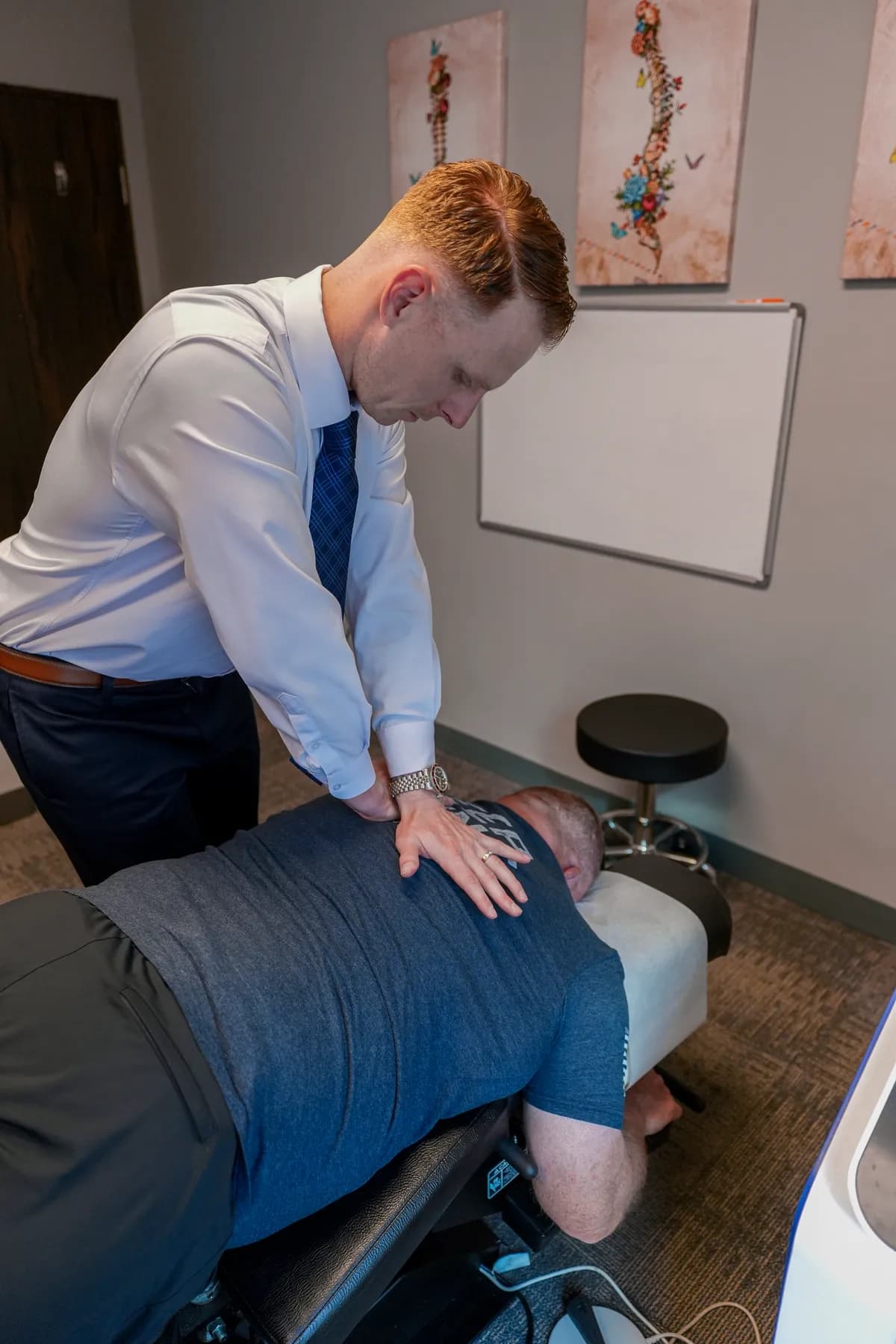
Can a chiropractor in Downers Grove IL help with headaches and migraines?
At SpineCo in Downers Grove IL, Dr. Ryan Bielecki, D.C. evaluates whether headaches have a cervical or structural origin — a common and often overlooked driver. When restricted cervical joints and muscular tension are contributing, chiropractic care supports relief by addressing those mechanical factors at the source. Every visit is 100% one-on-one.
Cervicogenic and tension-type headaches: the neck connection
Cervicogenic headache is a headache sourced from the structures of the cervical spine — typically the upper three cervical segments and the occipital region. Pain travels along a characteristic referral pathway from the base of the skull into the forehead, eye, or temple. Patients often describe it as one-sided, aggravated by neck movement or prolonged static posture, and unresponsive to typical headache medication.
Tension-type headaches share overlapping mechanisms. The suboccipital muscles — the small group of muscles at the base of the skull — are particularly prone to chronic contraction when the cervical spine is restricted or when forward head posture loads them excessively. That sustained contraction, over hours or days, creates the band-like or pressure-type pain that many patients recognize.
Both patterns are structural in origin. They respond to care aimed at restoring joint mobility, reducing muscular tension, and normalizing the nervous system signaling from the cervical joints. This is distinct from headaches that are primarily vascular, medication-related, or driven by systemic factors — and accurate classification is where proper assessment makes the difference.
Migraines and the cervical spine: a measured view
Migraines are a distinct neurological condition with a more complex mechanism than cervicogenic or tension headaches. The donor literature and chiropractic evidence indicate that spinal pressure on the nervous system can be a contributing factor for some patients who experience migraines. The precise relationship varies by individual, and chiropractic care is not a guaranteed intervention for migraine frequency or severity.
What the structural evaluation at SpineCo looks for is whether cervical restrictions or muscular tension are present in a way that may be contributing to the overall load on the nervous system. Some patients find that addressing those structural factors supports a reduction in headache burden over time. The evaluation will determine whether chiropractic care is a reasonable part of the picture for your specific presentation.
If you experience aura, sudden onset severe headache, neurological symptoms, or headaches following head trauma, those presentations warrant medical evaluation first to rule out causes that require different management.
What structural headache assessment looks like at SpineCo
Dr. Bielecki begins with a thorough health history: headache onset, pattern, duration, location, associated symptoms, triggers, and what has or has not helped. This intake matters because it allows him to distinguish mechanical patterns from non-mechanical ones — and to identify red flags that would direct the patient elsewhere.
The physical examination maps cervical range of motion, joint mobility at each segment, and muscle tone in the posterior cervical and suboccipital regions. Segmental restrictions in the upper cervical spine — C1, C2, C3 — are particularly relevant given their direct anatomical relationship to the pathways through which cervicogenic headache refers pain.
Where structural contributors are identified, the care plan targets those segments with precise spinal adjustments, soft tissue techniques at the areas of muscular guarding, and posture coaching to address the positional habits that are loading those segments. Every session is one-on-one with Dr. Bielecki.
Posture, screens, and the headache-driving habits of modern life
Forward head posture — the position most adults and adolescents hold for hours each day during device use — concentrates mechanical stress at the upper cervical spine and suboccipital region. The cumulative effect is progressive restriction of cervical mobility and sustained muscular tension, both of which are direct contributors to cervicogenic and tension-type headache patterns.
Addressing those positional habits is part of the care plan at SpineCo, not an afterthought. Without changing the loads placed on the spine between sessions, the same mechanical drivers may continue. Dr. Bielecki discusses practical modifications — ergonomic adjustments, movement patterns, and loading strategies — that are specific to work, driving, daily activity, or training demands.
Start with a focused evaluation
Dr. Bielecki's first-visit evaluation is intended to clarify the headache pattern, whether a musculoskeletal contribution is plausible, and whether chiropractic care, medical evaluation, or referral is the more appropriate next step.
SpineCo is at 1121 Warren Ave Suite 210, Downers Grove, IL 60515. Schedule online via the Jane App or call (630) 442-0146. Office hours: Monday, Wednesday, and Thursday 9am–6pm; Tuesday 2pm–7pm; Friday 9am–2pm; Saturday and Sunday closed.
Identify the problem. Build the right plan. Return to what matters.
Schedule an evaluation online, or call the office and talk it through first.
FAQ
Questions, answered.
How can I tell if my headaches are coming from my neck?
Signs that point to a cervical origin include headaches that worsen with neck movement or prolonged sitting, pain that starts at the base of the skull and travels forward, relief with certain neck positions, and headaches that accompany neck stiffness. A structural examination by Dr. Bielecki at SpineCo can differentiate cervicogenic headaches from other types based on your history and physical findings.
Will chiropractic care help my migraines?
Some patients with migraines find that addressing cervical restrictions and nervous system pressure through chiropractic care supports a reduction in headache burden. Results vary by individual, and migraine management is complex. Dr. Bielecki will evaluate your specific presentation and give you an honest assessment of whether structural care is a reasonable component of your overall approach.
I have tried pain medication for headaches and it is not enough — what else is there?
Pain medication addresses the symptom but not the source when headaches have a structural driver. If restricted cervical joints and muscular tension are contributing to your headache pattern, a structural approach — spinal adjustments, soft tissue care, and posture correction — targets the mechanism rather than the output. The first visit at SpineCo begins with a thorough assessment to determine whether that is the case for you.
What does the first headache evaluation at SpineCo include?
Dr. Bielecki begins with a detailed health history and reviews the headache pattern, including onset, location, frequency, triggers, and associated symptoms. The examination then assesses whether the cervical spine may be contributing and whether chiropractic care is appropriate or another type of evaluation is needed.
How long before I might notice improvement in my headaches?
Many patients with cervicogenic or tension-type headaches notice improvement in frequency or intensity within the first few visits as restricted joints are mobilized and muscular tension is reduced. The timeline depends on how long the structural pattern has been present, the degree of restriction, and how consistently the postural contributors are being addressed between visits. Dr. Bielecki will give you realistic expectations based on your examination findings.
How do I book an appointment at SpineCo for headache evaluation?
Book online through the Jane App or call (630) 442-0146. SpineCo is located at 1121 Warren Ave Suite 210, Downers Grove, IL 60515. Hours: Mon/Wed/Thu 9am–6pm, Tue 2pm–7pm, Fri 9am–2pm, Sat/Sun closed. Every appointment is one-on-one with Dr. Ryan Bielecki, D.C.