Conditions · Other
Vertigo
Vertigo is not just dizziness. It is the perception that the environment is spinning or moving when it is not — a specific signal that the systems responsible for spatial orientation and balance are receiving conflicting information. When those signals are distorted by disrupted nervous system input from the cervical spine, the structural contributions are often overlooked in favor of treatments that address only the inner ear.
At SpineCo: Chiropractic & Performance in Downers Grove IL, Dr. Ryan Bielecki, D.C. evaluates vertigo through the lens of spinal structure and neurological function. For patients whose dizziness has a cervicogenic component — driven by restricted cervical joints sending aberrant proprioceptive signals to the brain — chiropractic care targeting those specific structures is a logical and focused approach.
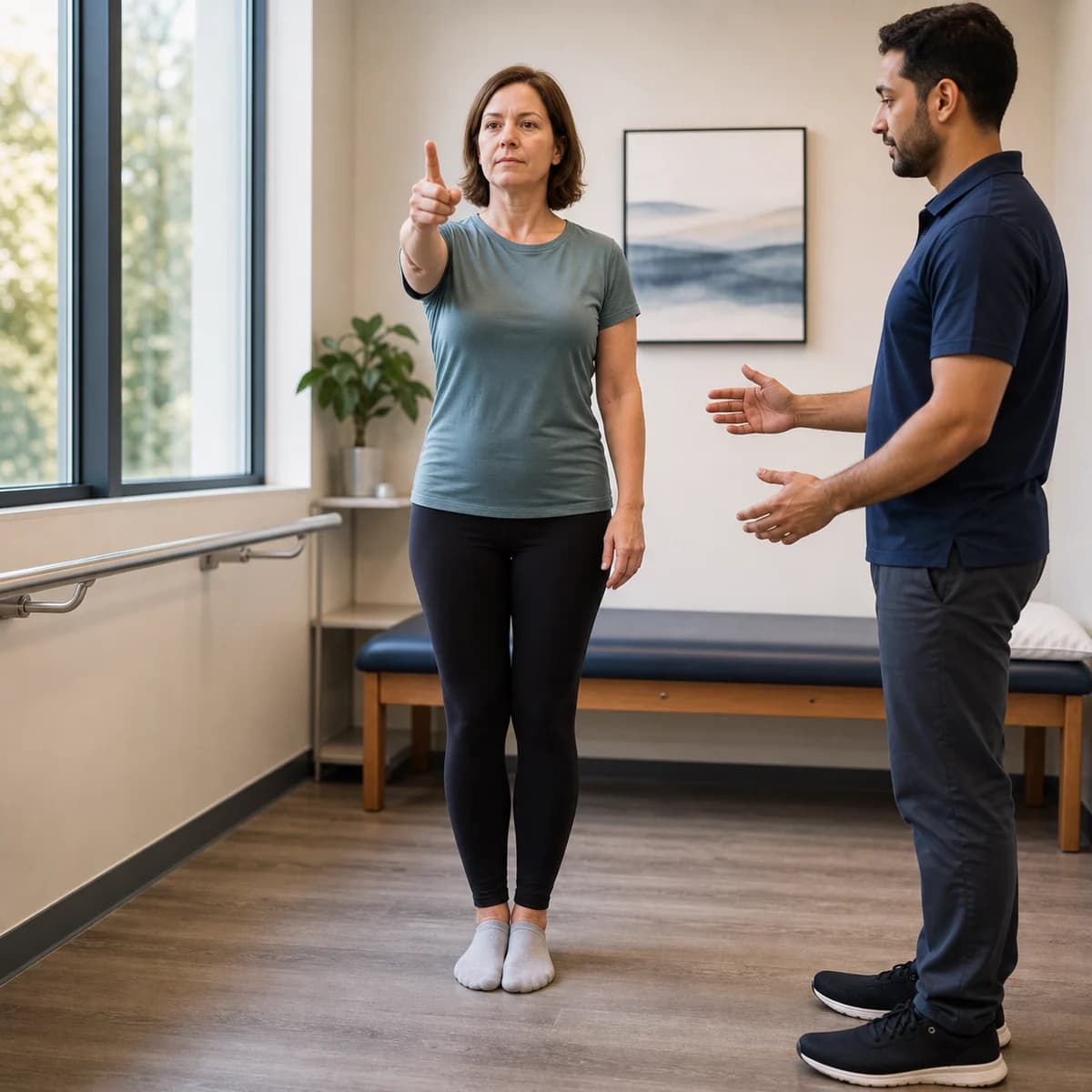
Can a chiropractor in Downers Grove IL help with vertigo and dizziness?
At SpineCo in Downers Grove IL, Dr. Ryan Bielecki, D.C. assesses vertigo through a structural lens — evaluating how cervical spine mechanics and nervous system signaling may be contributing to dizziness and balance disruption. A careful history and physical examination determine whether chiropractic care is appropriate for your presentation.
Dizziness and vertigo are not the same thing
Distinguishing between the two matters for care. Dizziness that presents as lightheadedness or a sensation of nearly fainting involves different mechanisms than true vertigo, where the room appears to spin or tilt. Vertigo indicates a disproportion in the balance-orienting signals reaching the brain — from the vestibular system, the visual system, and the joint mechanoreceptors throughout the body, particularly the cervical spine.
At SpineCo, Dr. Bielecki takes a careful history at the first visit specifically to differentiate these presentations. The mechanism behind a patient's dizziness determines both whether chiropractic care is appropriate and how it should be structured. Presentations that suggest a non-musculoskeletal or more serious underlying cause are identified and referred appropriately.
The cervical spine's role in balance and spatial orientation
The upper cervical spine — the suboccipital region, atlas, and axis — is densely packed with proprioceptive mechanoreceptors that continuously send position and motion signals to the brainstem and cerebellum. These signals are integrated with input from the inner ear and the visual system to maintain a coherent sense of where the head and body are in space.
When restricted or hypermobile cervical segments alter the quality of these mechanoreceptive signals, the brain receives conflicting input — vestibular and visual data that does not match what the joints are reporting. That mismatch can manifest as vertigo, balance instability, or dizziness that is worse with certain neck positions or head movements.
Cervicogenic vertigo does not originate in the inner ear. It originates in the cervical joints and the nervous system pathways they feed into. Addressing the structural basis — restoring segmental mobility, normalizing joint mechanoreception, reducing periarticular muscular tension — directly targets that mechanism.
Assessment at SpineCo: what the evaluation covers
The first visit begins with a thorough history: when symptoms started, what triggers or relieves them, whether dizziness correlates with neck position or movement, any associated symptoms such as tinnitus or visual disturbance, and what prior evaluations or treatments have been tried. This history helps clarify the clinical picture before any physical examination begins.
The structural examination maps cervical range of motion, identifies restrictions or hypermobility at specific segments, and assesses the muscles and soft tissue of the posterior cervical and suboccipital regions. Dr. Bielecki evaluates posture and movement patterns that may be loading the upper cervical spine and disrupting proprioceptive signaling.
The goal of the assessment is to determine whether a structural, cervicogenic component is present and whether chiropractic care is likely to be helpful. Some vertigo presentations fall outside the scope of what chiropractic care addresses, and an honest assessment at the first visit makes that clear.
Symptoms that accompany vertigo — when to take them seriously
Vertigo can accompany a range of other symptoms: nausea, a sensation of pressure in the head, balance instability, or visual disturbance. Many of these are consistent with cervicogenic vertigo and resolve as the structural contributors are addressed. Others warrant medical evaluation before chiropractic care begins.
Sudden severe headache of unusual onset, vertigo following head or neck trauma, double vision, slurred speech, or significant unilateral weakness are presentations that should be evaluated medically first. Dr. Bielecki screens for these at the initial assessment. SpineCo serves patients whose presentations are appropriate for chiropractic evaluation — and identifies those that are not.
For patients whose symptoms have been present long-term without a clear diagnosis, and whose prior providers offered little explanation, the detailed history and structural examination at SpineCo often provides clarity that was previously missing.
One-on-one care — and no guesswork about whether it can help
There is no risk to see what we can do for you. Dr. Bielecki's first-visit evaluation is specific enough to give you a clear picture of whether your vertigo has a structural component and what a realistic course of chiropractic care would look like. If your presentation is outside that scope, you will leave with a clear understanding of that too.
Every appointment at SpineCo is 100% one-on-one with Dr. Bielecki — no assistants, no handoffs. SpineCo is located at 1121 Warren Ave Suite 210, Downers Grove, IL 60515. Book online via the Jane App or call (630) 442-0146. Office hours: Monday, Wednesday, and Thursday 9am–6pm; Tuesday 2pm–7pm; Friday 9am–2pm; Saturday and Sunday closed.
There is no risk to see what we can do for you.
Book online in under a minute, or call the office and talk it through first.
FAQ
Questions, answered.
Can a structural problem in my neck cause vertigo?
Yes. Restricted cervical joints — particularly in the upper cervical spine — can disrupt the proprioceptive signals that the brain uses to orient the body in space. When those signals conflict with input from the vestibular system and eyes, the result can be vertigo or dizziness. This is called cervicogenic vertigo. Dr. Bielecki assesses for this structural contribution at the first visit.
How is cervicogenic vertigo different from inner ear vertigo?
Cervicogenic vertigo originates from disrupted joint mechanoreception in the cervical spine, not from the inner ear. It often correlates with neck position or movement, accompanies neck stiffness or pain, and responds to structural treatment of the cervical spine. Inner ear causes involve different mechanisms and typically require different management. The history and physical examination at SpineCo distinguishes between these presentations.
What should I expect at my first vertigo appointment at SpineCo?
Dr. Bielecki begins with a detailed health history — symptoms, triggers, duration, prior workup, and associated findings. A physical examination follows, assessing cervical mobility, joint restriction, and relevant neurological signs. By the end of the visit you will have a clear understanding of whether your vertigo has a structural component and what care, if any, is recommended.
Can chiropractic care make vertigo worse?
When the structural assessment identifies a cervicogenic component and chiropractic care is appropriately selected, worsening of symptoms is uncommon. Dr. Bielecki screens carefully for presentations that fall outside chiropractic scope — including those that may carry a higher risk profile. A careful examination before initiating care is precisely how those presentations are identified and excluded.
My vertigo has been evaluated before and nothing was found — should I still come in?
Many patients with cervicogenic vertigo report prior evaluations that were primarily focused on the inner ear or did not include a structural assessment of the cervical spine. If the structural contributors were not examined, a chiropractic evaluation provides a different and specific lens. Dr. Bielecki's first-visit assessment is thorough enough to determine whether something structurally relevant was being missed.
How do I book a vertigo evaluation at SpineCo in Downers Grove?
Book online through the Jane App at SpineCo's scheduling page or call (630) 442-0146. SpineCo is at 1121 Warren Ave Suite 210, Downers Grove, IL 60515. Hours: Mon/Wed/Thu 9am–6pm, Tue 2pm–7pm, Fri 9am–2pm, Sat/Sun closed. All visits are one-on-one with Dr. Ryan Bielecki, D.C.