The Services
Non-Surgical Spinal Decompression
A disc under pressure does not respond to rest the way a muscle does. The structure needs unloading — precise, controlled, repeatable unloading that creates the conditions for improved blood flow and nutrient exchange within the injured tissue. SpineCo: Chiropractic & Performance in Downers Grove IL offers computer-guided spinal decompression as a non-surgical approach to that problem.
Dr. Ryan Bielecki, D.C. applies spinal decompression as part of a broader care plan shaped around what each patient's assessment reveals. His specialties in disc injury, sciatica, and neck pain make spinal decompression a natural extension of his clinical work — not an add-on service, but a targeted mechanical intervention that fits a specific set of presentations.
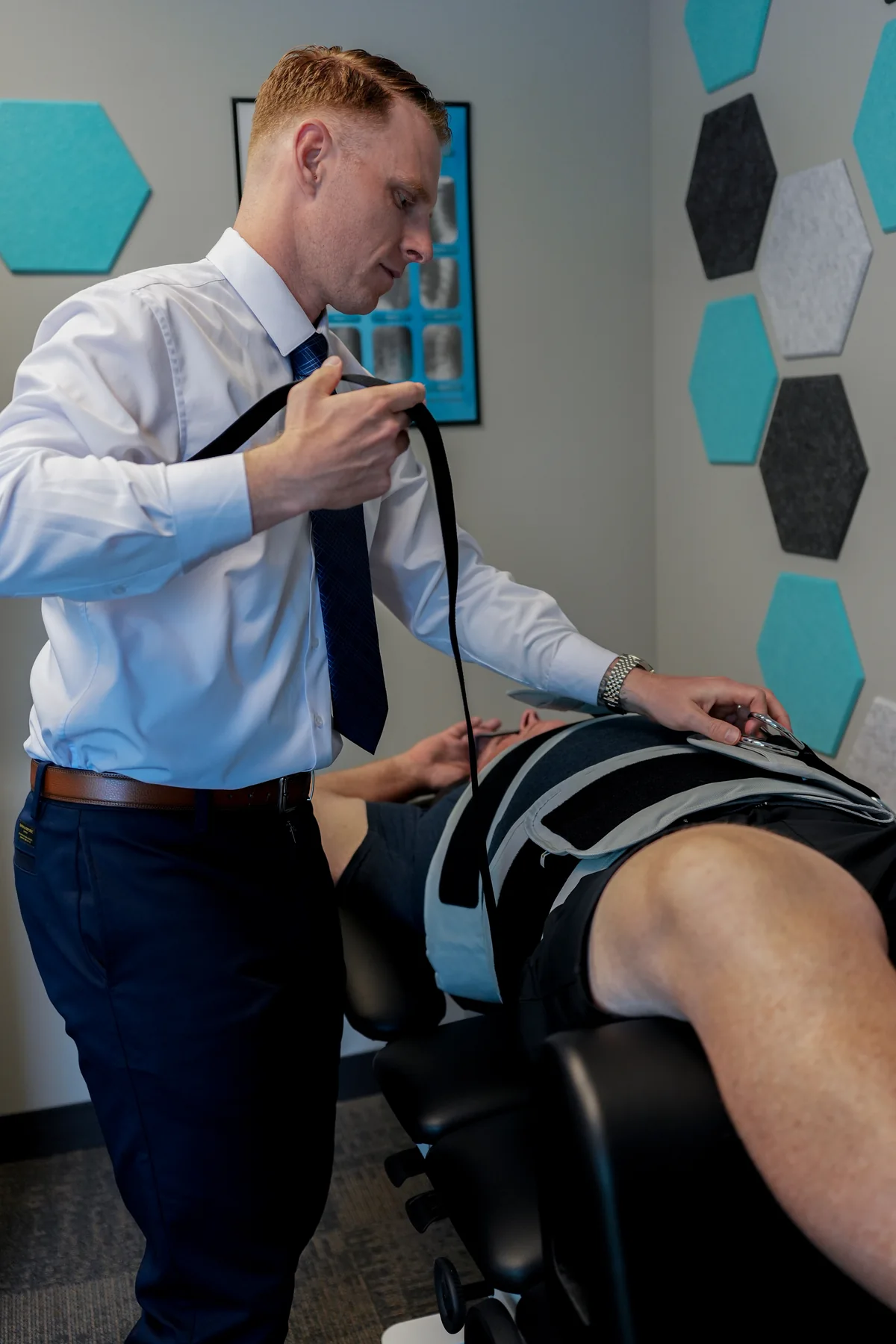
Where can I get spinal decompression therapy in Downers Grove IL?
SpineCo: Chiropractic & Performance in Downers Grove IL offers computer-guided spinal decompression under Dr. Ryan Bielecki, D.C. The non-surgical traction procedure targets disc pressure relief for bulging discs, herniated discs, sciatica, and related spinal conditions, with 100% one-on-one care at every session.
How computer-guided traction decompresses the disc
Spinal decompression works through a process of controlled distractive force — the spinal segment is gently elongated, creating negative pressure within the disc space. This negative pressure gradient supports the movement of fluids, nutrients, and oxygen back into disc tissue that is compressed, bulging, or herniated.
The computer-guided nature of the treatment matters. The system cycles through programmed patterns of stretch and relaxation, gradually reaching a peak over several minutes rather than applying static sustained force. That cycling pattern is what makes the therapy tolerable and allows the paraspinal muscles to remain relatively relaxed during the session.
For conditions involving the lumbar spine — lower back pain, leg-radiating sciatica, bulging or herniated discs — the table positions the patient to direct the decompressive force to the correct spinal level. The same mechanical principle applies to cervical decompression for neck pain and arm-radiating symptoms.
Dr. Bielecki's assessment-first approach to decompression candidacy
Not every back or neck pain patient is a decompression candidate, and not every disc presentation requires it. Dr. Bielecki evaluates each patient's history, imaging, and functional presentation before recommending spinal decompression. His own background — where recurring knee and shoulder injuries were traced to functional deficits in his spine and pelvis — reinforces that the structural picture matters as much as the symptom report.
Spinal decompression is most appropriate for patients with disc-related pain: bulging discs, herniated discs, degenerative disc disease, spinal stenosis, and post-surgical complications that meet candidacy criteria. Conditions with a different pain driver — facet-mediated pain, muscle strain, or structural instability — may call for a different primary intervention.
The intake process at SpineCo is designed to surface that distinction before any therapy begins. 100% one-on-one care means Dr. Bielecki is the one making that assessment and building the treatment plan, not delegating it.
What a course of spinal decompression looks like
Sessions at SpineCo are gentle and last less than 20 minutes. A typical course involves sessions three times per week for approximately one month, with the plan transitioning from passive decompression to active stabilization work as the patient responds. Many patients report meaningful pain relief within the first six to ten sessions.
Most patients complete their primary course of care within eight weeks. The program does not end with the table work — Dr. Bielecki integrates exercise and supportive therapies targeting the stabilizing ligaments, tendons, and muscles that need to carry load once the disc pressure is relieved. Heat, muscle stimulation, ultrasound, and cold therapy may support that rehabilitation phase.
The goal is not just symptom relief. The aim is to restore the disc environment, improve muscular control, and reduce the likelihood of recurrence. Periodic maintenance visits and a home exercise routine are part of the longer-term strategy Dr. Bielecki discusses with patients who have completed their initial plan.
When to consider spinal decompression
If lower back pain radiates into one or both legs, if neck pain travels into the arms, or if imaging has identified a bulging or herniated disc that has not responded to standard conservative care, spinal decompression is worth a conversation. Patients dealing with sciatica that disrupts sleep, work, or training are often the most motivated — and frequently the most responsive.
Spinal decompression is a non-surgical procedure. It does not require anesthesia, recovery time, or time away from work in the way surgical options do. For patients who want to exhaust non-invasive approaches before considering surgery, it represents a structured, well-tolerated option with a clear protocol.
SpineCo is located at 1121 Warren Ave Suite 210 in Downers Grove, IL. If you have questions about whether spinal decompression fits your situation, there is no risk to see what we can do for you.
There is no risk to see what we can do for you.
Book online in under a minute, or call the office and talk it through first.
FAQ
Questions, answered.
What conditions does spinal decompression treat at SpineCo?
Dr. Ryan Bielecki uses spinal decompression at SpineCo in Downers Grove IL for conditions involving disc pressure: bulging discs, herniated discs, degenerative disc disease, spinal stenosis, sciatica, and neck pain with arm-radiating symptoms. Candidacy is confirmed through an individual assessment before any sessions begin.
Is spinal decompression painful?
Most patients find spinal decompression comfortable. The computer-guided system cycles through gradual stretch and relaxation patterns, reaching a peak slowly rather than applying sudden force. Sessions last less than 20 minutes, and many patients report that the table work feels like a controlled, relieving stretch rather than a clinical procedure.
How many spinal decompression sessions will I need?
A typical course at SpineCo involves three sessions per week for about one month, with most patients completing their primary care within eight weeks. Many patients notice meaningful relief within six to ten sessions. Dr. Bielecki shapes the plan based on your individual response rather than applying a fixed number to every case.
Can spinal decompression help with sciatica?
Yes. Sciatica driven by disc compression — where a bulging or herniated disc is pressing on or near the nerve root — is one of the most common presentations Dr. Bielecki addresses with spinal decompression at SpineCo in Downers Grove IL. The decompressive unloading may help relieve pressure on the nerve and support recovery of the surrounding disc tissue.
Is spinal decompression a surgical procedure?
No. Spinal decompression at SpineCo is a non-surgical, non-invasive therapy. It uses a computer-guided traction table to apply controlled distractive force to the spine without injections, anesthesia, or recovery downtime. It is appropriate for patients who want to explore conservative options before considering surgical intervention.
How do I book a spinal decompression evaluation at SpineCo in Downers Grove?
Book online anytime through Jane App, or call (630) 442-0146. SpineCo is at 1121 Warren Ave Suite 210, Downers Grove, IL 60515. Office hours are Monday, Wednesday, and Thursday 9am–6pm; Tuesday 2pm–7pm; Friday 9am–2pm; Saturday and Sunday closed.