Conditions · Spine
Sciatica
Sciatica is a symptom pattern rather than a diagnosis that identifies one exact tissue. Symptoms may travel from the low back or buttock into the thigh, calf, or foot, but their location alone cannot confirm the spinal level, the structure involved, or whether the problem is coming from the lumbar spine at all.
At SpineCo, a modern spine and injury practice in Downers Grove, Dr. Ryan Bielecki, D.C., evaluates the history, neurological findings, movement, and other relevant clinical signs before recommending treatment. The plan is individualized, and patients are referred for imaging, medical assessment, or urgent care when the findings call for a different next step.
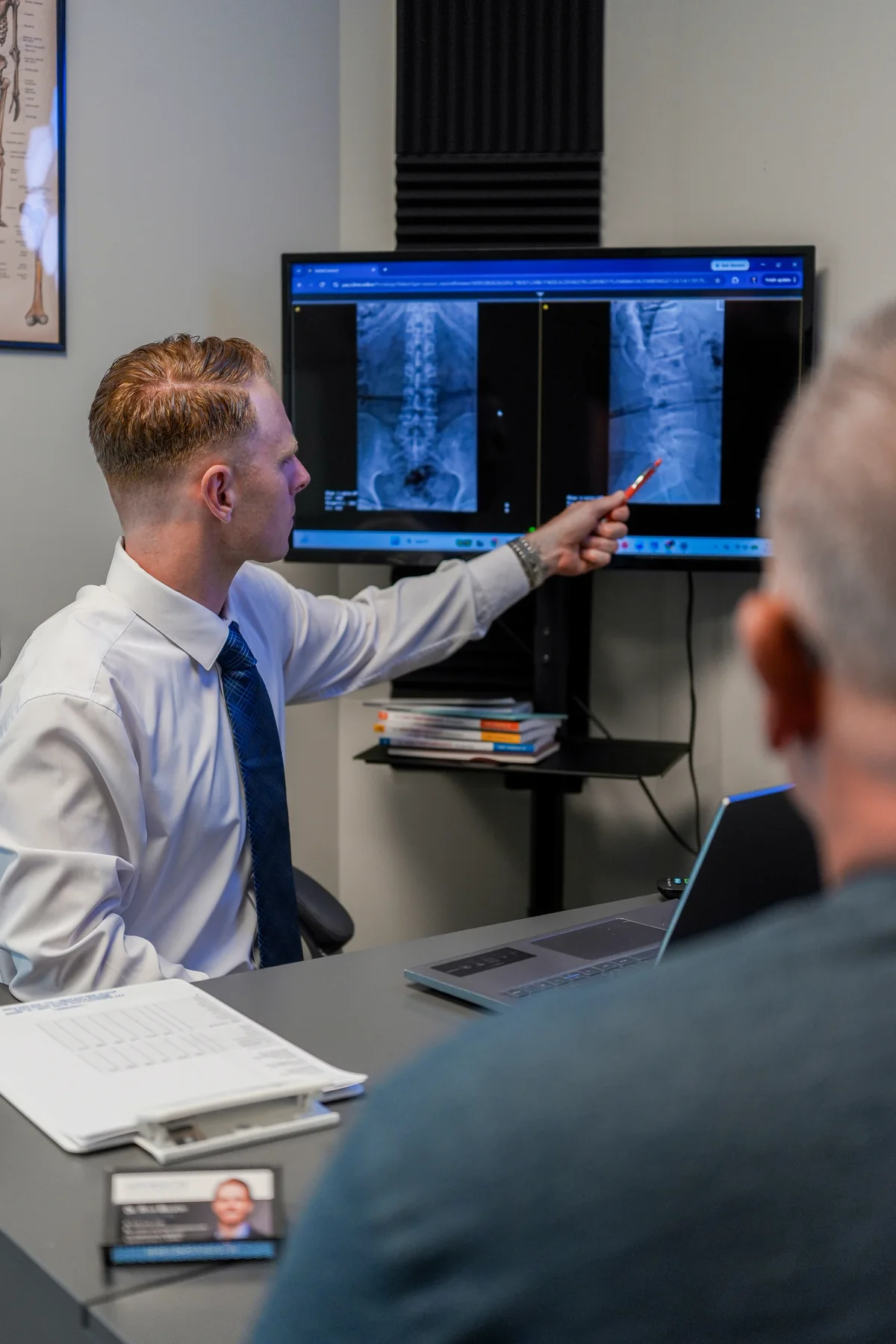
What causes sciatica and where can I get treatment in Downers Grove IL?
Sciatica describes pain and sometimes numbness, tingling, or weakness along a sciatic-nerve distribution. Lumbar nerve-root irritation is one possible cause, but other problems can produce similar symptoms. At SpineCo in Downers Grove IL, Dr. Ryan Bielecki, D.C., begins with an examination to determine whether conservative care, imaging, or referral is appropriate.
Sciatica is a symptom pattern, not a single diagnosis
The sciatic nerve is formed by nerve roots from the lower spine. Irritation or compression of a lumbar or sacral nerve root can produce radiating pain, tingling, numbness, or weakness in part of the leg. Disc herniation and spinal narrowing are possible contributors, but hip disorders, peripheral nerve problems, and other musculoskeletal or medical conditions can create overlapping symptoms.
The distribution of symptoms provides useful clinical clues, but it does not identify an exact source by itself. A focused evaluation may include strength, sensation, reflexes, nerve-tension procedures, lumbar and hip examination, and movement testing selected for the presentation. The purpose is to narrow the possibilities, identify safety concerns, and decide what type of care is reasonable.
New loss of bowel or bladder control, numbness around the groin or saddle area, rapidly worsening weakness, major trauma, fever with severe spinal pain, or other sudden neurological changes require urgent medical evaluation rather than a routine chiropractic visit.
How the evaluation guides care and imaging decisions
Dr. Bielecki reviews when the symptoms began, what makes them better or worse, prior episodes, health history, and the activities affected. The examination is then matched to that history instead of assuming that all leg pain comes from a disc or that every patient needs the same protocol.
Imaging is not routinely required for uncomplicated low back pain or sciatica. Existing studies are reviewed when available, and new imaging may be considered when trauma, progressive neurological findings, concern for a serious condition, or another clinical question would make the result likely to change management.
The recommendation may be conservative care, self-management guidance, additional testing, or referral. If the examination suggests a problem outside SpineCo's scope—or symptoms worsen or fail to progress as expected—coordination with an appropriate medical provider is part of the plan.
Where decompression may fit in a sciatica plan
Mechanical traction or computer-guided spinal decompression may be considered for selected patients when the evaluation suggests a disc-related or nerve-root presentation and safety screening does not identify a contraindication. It is not appropriate for every cause of leg pain and is not presented as a way to guarantee disc repair or pull a disc back into place.
Evidence for traction is mixed, and clinical guidelines do not support routine use for everyone with sciatica. If decompression is considered at SpineCo, it is treated as a selected adjunct: settings and response are monitored, and treatment is changed or stopped if it does not fit the intended clinical goal.
A broader plan may also include chiropractic or manual care, progressive exercise, activity guidance, and education. The combination depends on the examination, the patient's goals, and measurable changes in walking, sitting, sleep, work, or other daily activities—not on a predetermined package.
Starting care for sciatica in Downers Grove
The first appointment includes a health and symptom history, orthopedic and neurological procedures appropriate to the presentation, and a discussion of the findings. Dr. Bielecki provides the evaluation and treatment personally and explains whether a conservative plan is reasonable, what each recommended step is intended to address, and when referral is more appropriate.
No treatment can guarantee a fixed result or recovery date. Progress is reassessed through symptoms, neurological findings, function, and the activities that matter to the patient. The plan can be continued, modified, paused, or referred based on that response.
Appointments are available online through Jane App or by calling (630) 442-0146. The clinic is at 1121 Warren Ave Suite 210, Downers Grove, IL 60515.
Identify the problem. Build the right plan. Return to what matters.
Schedule an evaluation online, or call the office and talk it through first.
FAQ
Questions, answered.
How do I know if what I have is true sciatica or something else?
Sciatica usually describes symptoms traveling along a sciatic-nerve distribution, but lumbar nerve-root irritation is not the only possible explanation for leg pain. Hip conditions, peripheral nerve problems, and referred musculoskeletal pain can overlap. A history and examination—including neurological and orthopedic findings selected for the presentation—help determine the appropriate next step.
Can chiropractic care help sciatica, or do I need surgery?
Many non-emergency presentations are initially managed conservatively, but the appropriate plan depends on the cause, neurological findings, symptom severity, health history, and response to care. Chiropractic or manual care, exercise, education, and selected use of decompression may be considered. Progressive weakness, cauda equina symptoms, severe or worsening findings, or lack of expected progress can require medical or surgical evaluation.
Why does my sciatica feel worse when sitting?
Sitting can aggravate some lumbar and hip-related symptom patterns, but that response does not prove that a disc is the source. Seat position, spinal posture, hip position, duration, and nerve sensitivity can all influence symptoms. SpineCo uses that information as one part of the evaluation and provides activity guidance based on the complete clinical picture.
How long does it take for sciatica to improve with conservative care?
There is no universal timeline. Duration, neurological findings, the underlying diagnosis, overall health, daily demands, and response to care all matter. Dr. Bielecki explains the initial plan after the evaluation and reassesses function and neurological status rather than promising that earlier care or a fixed number of visits will produce a particular outcome.
How do I book a sciatica evaluation in Downers Grove?
Book online through Jane App at any time, or call SpineCo at (630) 442-0146. The clinic is located at 1121 Warren Ave Suite 210, Downers Grove, IL 60515. Monday, Wednesday, and Thursday 9am–6pm; Tuesday 2pm–7pm; Friday 9am–2pm; Saturday and Sunday closed.
Clinical references