Auto Injuries
Auto Injury Care
Whiplash, neck or back pain, headaches, and radiating symptoms can follow an auto accident, but those symptoms do not all point to the same injury or treatment. Some require emergency or medical assessment before any musculoskeletal care. Others may be appropriate for a conservative plan after a thorough examination.
SpineCo treats Auto Injury Care as a major clinical pathway, not a generic service link. The process brings examination, documentation, individualized treatment planning, and coordination of care into one clear flow. It does not promise a diagnosis, recovery timeline, insurance result, or legal outcome before the patient has been evaluated.
What does a careful evaluation after an auto accident include?
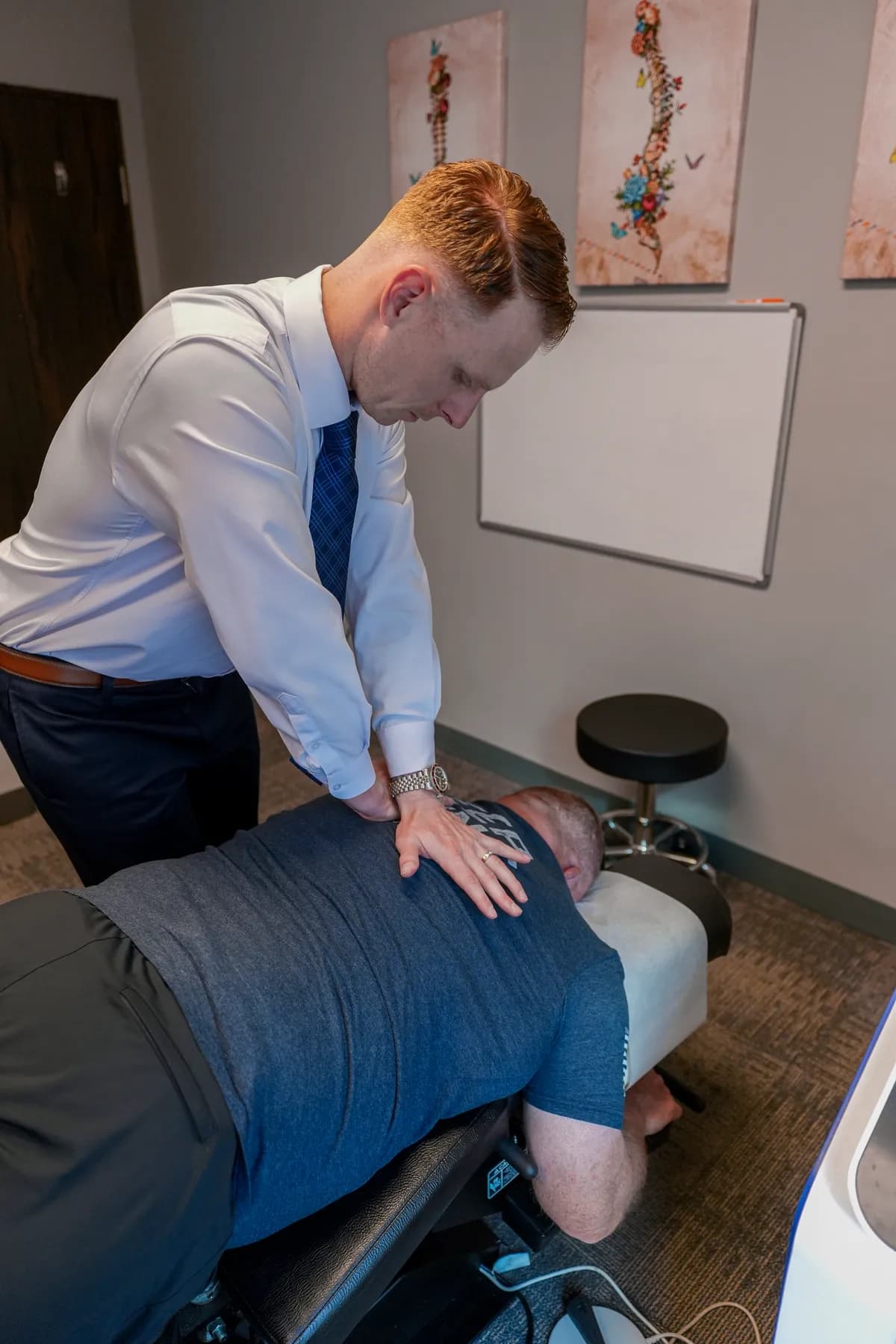
An auto injury evaluation should begin with safety screening, a history of the collision and symptoms, and an appropriate orthopedic and neurological examination. At SpineCo, Dr. Ryan Bielecki documents the findings, explains whether conservative care fits, and coordinates imaging, referral, or communication with other providers when clinically indicated.
Safety screening comes before musculoskeletal treatment
Symptoms after a collision can appear immediately or become more noticeable later. Neck stiffness, back pain, headaches, shoulder discomfort, and pain, tingling, or numbness traveling into an arm or leg all deserve attention. The timing of a symptom does not by itself establish its cause, severity, or connection to a particular structure.
Call 911 or seek emergency care for loss of consciousness, increasing drowsiness, repeated vomiting, a worsening headache that does not go away, seizure, slurred speech, unusual confusion, one pupil larger than the other, or new weakness, numbness, or loss of coordination. SpineCo is not an emergency department and routine chiropractic care should not delay urgent evaluation.
A one-on-one examination clarifies the next step
Dr. Bielecki reviews how the collision occurred, when symptoms began, relevant health history, prior injuries, and how the problem affects sleep, work, driving, and normal activity. The physical examination is selected for the presentation and may include spinal motion, posture, muscle and joint findings, orthopedic tests, strength, sensation, reflexes, and other neurological screening.
Imaging is not automatic after every collision, and a chiropractic examination does not replace emergency trauma assessment. Existing studies are reviewed when available. New imaging or referral is recommended when clinically indicated by the mechanism, examination, progressive neurological findings, concern for fracture or another serious injury, or when the result would change treatment planning.
Documentation supports clinical continuity
The initial record documents the patient's report, relevant history, examination findings, functional limitations, clinical assessment, and recommended next steps. Follow-up notes track changes in symptoms, objective findings, function, treatment provided, and response. Clear records help the patient and authorized healthcare providers understand what was found and how the plan develops.
Clinical documentation is not a promise that an insurer will cover care or that a legal claim will succeed. SpineCo does not determine fault, offer legal advice, or represent patients in insurance matters. Records can be shared with the patient or another authorized party in accordance with applicable consent and privacy requirements.
Treatment planning is individualized and measurable
When conservative care is appropriate, the plan may combine chiropractic or manual care, soft-tissue treatment, rehabilitation, progressive exercise, activity guidance, and other services selected from the examination. The combination is not predetermined by the fact that a collision occurred. It is built around the diagnosed problem, safety considerations, and the patient's functional goals.
Progress may be measured through motion, strength, neurological findings, sleep, driving tolerance, work duties, and other activities that matter to the patient. There is no universal number of visits or fixed recovery date. Dr. Bielecki reassesses the response, changes the plan when appropriate, and refers when symptoms worsen, fail to progress as expected, or require another type of care.
Coordination keeps each provider in the right role
Auto injury care may involve a primary-care clinician, emergency department, imaging facility, medical specialist, rehabilitation provider, or other healthcare professional. With the patient's authorization, SpineCo can communicate relevant findings and records so that recommendations are not made in isolation and duplicated care is reduced where possible.
The same boundary applies to attorneys and insurance representatives. SpineCo can provide accurate clinical records when properly authorized, but legal strategy, fault, deadlines, and coverage questions belong with the appropriate legal or insurance professional. The clinic's role is careful examination, clinically appropriate care, honest documentation, and referral when needed.
Identify the problem. Build the right plan. Return to what matters.
Schedule an evaluation online, or call the office and talk it through first.
FAQ
Questions, answered.
What symptoms does SpineCo evaluate after an auto accident?
Common reasons patients seek an evaluation include whiplash-associated neck pain or stiffness, back pain, headaches, shoulder or upper-back discomfort, and radiating pain, tingling, or numbness. Those symptoms can have different causes. Dr. Bielecki uses the history and examination to determine whether conservative care, imaging, medical evaluation, or another referral is appropriate.
When should I seek emergency care after a collision?
Call 911 or go to an emergency department for loss of consciousness, increasing drowsiness, repeated vomiting, seizure, slurred speech, unusual confusion, worsening headache, unequal pupils, new weakness or numbness, or loss of coordination. Major trauma, severe pain, or rapidly worsening symptoms also should not wait for a routine chiropractic appointment.
What happens during the first auto injury visit?
Dr. Bielecki reviews the collision and symptom history, relevant health information, and functional changes. He then performs examination procedures appropriate to the presentation, which may include spinal motion, orthopedic tests, strength, sensation, reflexes, and neurological screening. He explains the findings and whether treatment, imaging, referral, or another next step is appropriate.
Will I automatically need X-rays or an MRI?
No. Imaging decisions depend on the collision, examination, neurological findings, concern for serious injury, prior studies, and whether the result would change care. Some patients need emergency imaging before chiropractic evaluation; others do not need new imaging. SpineCo reviews or coordinates imaging only when clinically indicated.
Can SpineCo provide records to an insurer, attorney, or another doctor?
SpineCo maintains clinical records and can provide authorized copies or coordinate with another healthcare provider when appropriate. The clinic documents care but does not determine fault, guarantee insurance coverage, or provide legal advice. Questions about claims, deadlines, or legal strategy should go to the patient's insurer or attorney.
How do I request an auto injury evaluation in Downers Grove?
Book online through Jane App or call (630) 442-0146. SpineCo is at 1121 Warren Ave Suite 210, Downers Grove, IL 60515. Office hours are Monday, Wednesday, and Thursday 9am-6pm; Tuesday 2pm-7pm; Friday 9am-2pm; Saturday and Sunday closed.
Clinical references
Sources used on this page
Related care