Conditions · Spine
Back Pain
Back pain can begin suddenly after a lift, fall, or awkward movement, or develop gradually without one clear event. Symptoms may stay in the lower back or travel into the hip, buttock, or leg. Because muscles, joints, discs, nerves, and some non-spinal conditions can produce overlapping symptoms, pain location alone does not establish a diagnosis.
SpineCo: Chiropractic & Performance takes an assessment-first approach to back pain in Downers Grove. The goal is to understand how the symptoms started, what makes them better or worse, how they affect daily activity, and whether any findings call for a different level of care. If conservative care is appropriate, the plan is individualized and adjusted according to response rather than based on a preset visit schedule.
Where can I get a proper assessment for back pain in Downers Grove IL?
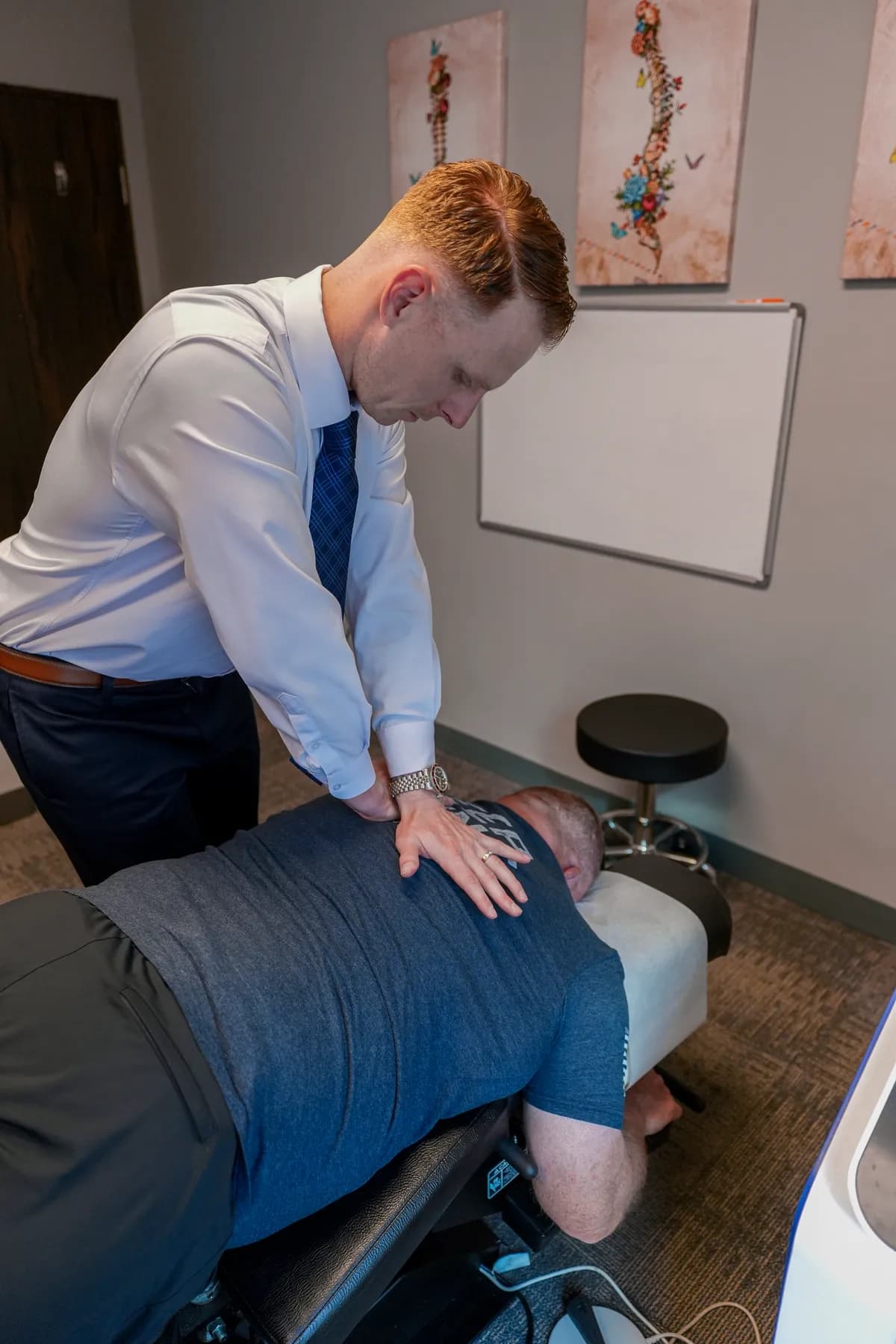
At SpineCo in Downers Grove, back pain care begins with a one-on-one history and physical exam. Dr. Ryan Bielecki, D.C., reviews joint motion, movement, and relevant orthopedic and neurological findings, then explains whether conservative care is appropriate or whether imaging or medical referral should come first.
How is back pain evaluated before treatment?
A back pain evaluation starts with context. Dr. Bielecki reviews the onset and pattern of symptoms, relevant health history, prior injuries, current activity, and any numbness, tingling, or weakness. The physical exam may include movement, orthopedic, and neurological checks selected for the individual. These findings help form a working clinical impression; they cannot guarantee that one structure is the sole source of pain.
Imaging is not automatic. The American College of Radiology and NICE advise against routine imaging for uncomplicated low-back pain because a scan may not change early management. Imaging or referral may be appropriate when the history or exam raises concern for serious disease, significant trauma, progressive neurological changes, or symptoms that are not improving as expected.
Before care begins, Dr. Bielecki explains the findings, reasonable options, and the purpose of any proposed treatment. Patients can ask questions and decide whether the plan fits their goals. If the presentation falls outside the clinic's scope, the next step is referral rather than treatment at SpineCo.
What can contribute to low-back pain?
Back pain often has more than one contributor. A strain or sprain, irritated spinal joint, age-related disc change, or nerve irritation may play a role. Work demands, training load, prolonged positions, sleep, stress, and general conditioning can also influence how symptoms behave. In some episodes, no single tissue can be identified with certainty even after an appropriate evaluation.
Leg pain, numbness, or tingling can occur when a nerve is irritated, but those symptoms require screening rather than an assumption that every case is a disc problem or sciatica. Likewise, an imaging finding does not always explain a person's pain. The clinical picture comes from the history, examination, and response over time.
This is why the plan should match the person, not just the symptom label. Someone whose pain began after lifting may need a different starting point than someone with gradual stiffness, recurring episodes, or symptoms extending below the knee.
What can conservative care include?
Clinical guidelines generally encourage people with uncomplicated low-back pain to remain active within tolerance and use care that supports function. Depending on the assessment, a SpineCo plan may include education, graded movement or exercise, soft-tissue work, and manual therapy. Chiropractic manipulation is one possible component when appropriate; it is not presented as the right choice for every patient or as a stand-alone cure.
NICE recommends considering manual therapy only as part of a broader package that includes exercise, with or without a psychological approach. That is consistent with SpineCo's focus on how the back tolerates everyday movement and load, not simply how it feels immediately after a visit.
Progress is monitored through changes that matter to the patient, such as walking, sitting, sleeping, lifting, training, or completing work tasks. A lack of expected progress, new symptoms, or a change in neurological findings can be a reason to reassess the plan or coordinate medical evaluation.
When does back pain need urgent medical attention?
Some symptoms should not wait for a routine chiropractic appointment. Seek emergency medical evaluation for new trouble controlling or emptying the bladder or bowel, numbness around the groin or saddle area, or rapidly worsening weakness in one or both legs. These can be warning signs of serious nerve compression.
Prompt medical assessment is also important for severe back pain after a significant fall or collision, or back pain accompanied by fever, unexplained weight loss, a known cancer history, suspected infection, or other concerning illness. When symptoms are severe, rapidly worsening, or feel life-threatening, call 911 or go to an emergency department.
This page offers general education and cannot determine the cause or urgency of an individual's symptoms. When in doubt about a warning sign, choose timely medical evaluation rather than waiting for an online booking.
What should I expect at SpineCo in Downers Grove?
New patients start with a history and examination with Dr. Bielecki. He reviews what the assessment can and cannot establish, discusses whether conservative care is reasonable, and outlines alternatives when imaging, medical evaluation, or another provider may be more appropriate. Treatment may begin the same day only when the clinical picture is clear and the patient agrees with the plan.
Care is delivered one-on-one by Dr. Bielecki rather than delegated to an assistant or technician. Having the same clinician evaluate and treat the case makes it easier to compare symptoms and function from visit to visit and adjust the approach when needed.
SpineCo is located at 1121 Warren Ave Suite 210 in Downers Grove. Booking is available online through Jane App or by calling (630) 442-0146. Hours are Monday, Wednesday, and Thursday 9am–6pm; Tuesday 2pm–7pm; Friday 9am–2pm; and Saturday and Sunday closed.
Identify the problem. Build the right plan. Return to what matters.
Schedule an evaluation online, or call the office and talk it through first.
FAQ
Questions, answered.
How does SpineCo evaluate back pain?
Dr. Bielecki reviews how the symptoms began, what changes them, relevant health history, and their effect on daily activity. He then selects movement, orthopedic, and neurological checks based on the presentation. The purpose is to form a reasonable working impression, screen for findings that need referral, and decide collaboratively whether conservative care is appropriate.
Is chiropractic care appropriate for every case of low-back pain?
No. Appropriateness depends on the history, examination, patient preferences, and any contraindications or warning signs. When suitable, manual therapy may be one part of a broader conservative plan that can include education and exercise. SpineCo refers patients for imaging or medical evaluation when the findings suggest that chiropractic care should not be the first step.
What if my back pain has lasted for months or years?
Persistent back pain can involve several physical and contextual contributors, and duration alone does not identify the cause. The evaluation still begins with current symptoms, function, health history, and relevant examination findings. Dr. Bielecki uses that information to discuss realistic goals, conservative options, and reasons that coordination with another healthcare provider may be useful.
Do I need an X-ray or MRI before my first appointment?
Usually not. Major guidelines advise against routine imaging for uncomplicated low-back pain, and many people can be evaluated clinically first. Imaging may be appropriate when serious disease is suspected, neurological deficits are progressing, significant trauma occurred, or the result is likely to change management. Bring prior reports or images if you already have them.
Which back pain symptoms need urgent medical care?
Seek emergency evaluation for new bladder or bowel dysfunction, numbness around the groin or saddle area, or rapidly worsening leg weakness. Severe pain after major trauma, or back pain with fever, unexplained weight loss, known cancer, or suspected infection also warrants prompt medical assessment. Call 911 for severe or life-threatening symptoms.
How do I book a back pain assessment in Downers Grove?
Book online through Jane App or call SpineCo at (630) 442-0146. The clinic is at 1121 Warren Ave Suite 210, Downers Grove, IL 60515. Your first visit includes a one-on-one history and examination, an explanation of the findings, and a discussion of whether conservative care or referral is the appropriate next step.
Clinical references
Sources used on this page
- ACR Appropriateness Criteria®: Low Back Pain — American College of Radiology
- Low back pain and sciatica in over 16s: assessment and management (NG59) — National Institute for Health and Care Excellence
- Back Pain: Symptoms, Types, and Causes — National Institute of Arthritis and Musculoskeletal and Skin Diseases
- Noninvasive Treatments for Acute, Subacute, and Chronic Low Back Pain — American College of Physicians (PubMed)